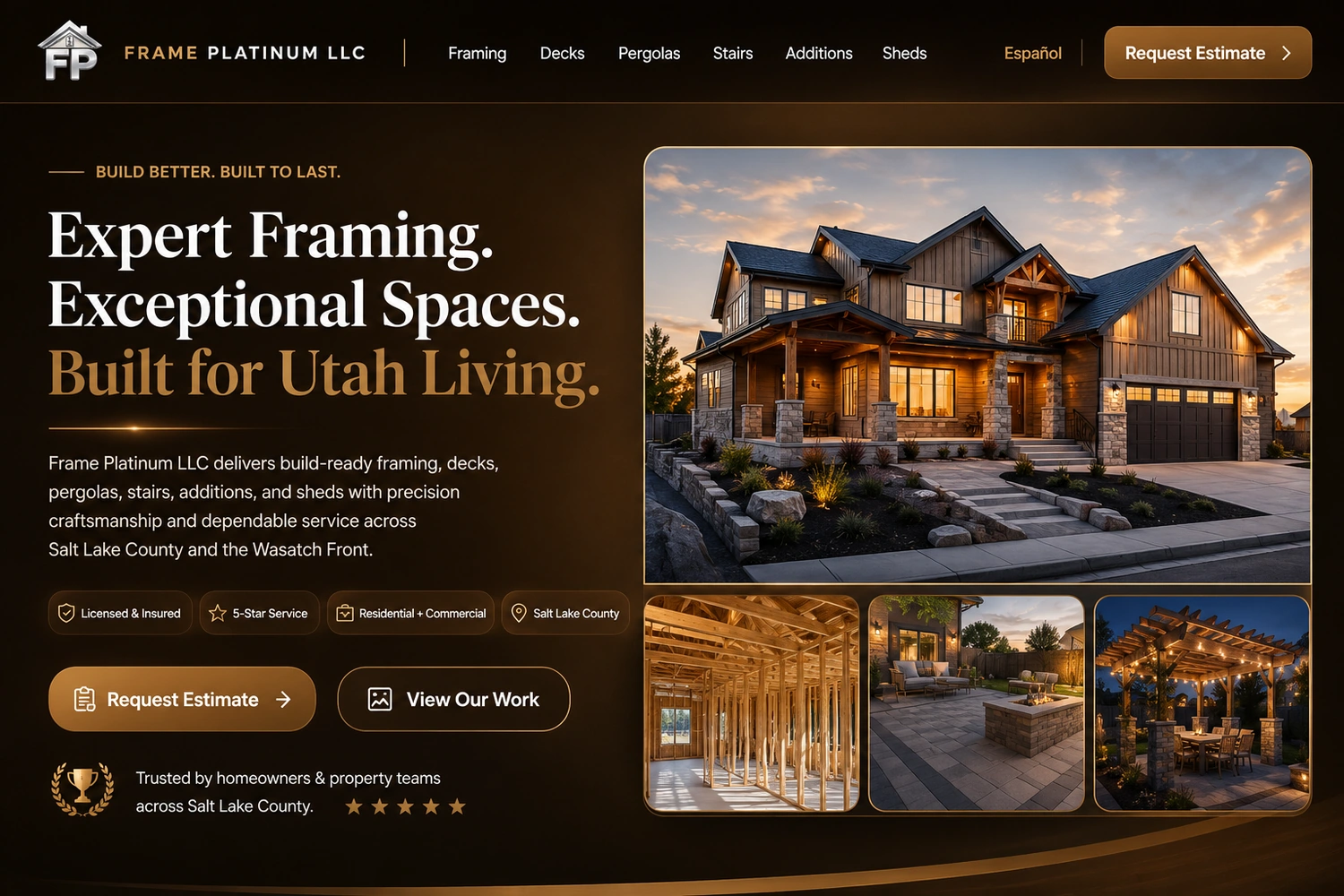
Put the right jobs up front
Let additions, remodels, decks, basements, structural work, and outdoor builds appear early so higher-value visitors can recognize their kind of job immediately.
Tell us whether the contractor needs more remodels, additions, outdoor builds, repairs, or higher-value project inquiries.
The page should answer the quiet screening questions before the estimate ever starts: Are you licensed and insured? Who runs the job daily? How is scope handled? What happens when the project changes?
Let additions, remodels, decks, basements, structural work, and outdoor builds appear early so higher-value visitors can recognize their kind of job immediately.
Show license-ready trust, real project proof, reviews, and who supervises the work so the page feels like a real contractor brand instead of a generic ad.
A stronger contractor page hints at written estimates, clear schedules, and a clean change-order path so bigger jobs feel safer to start.
State and industry guidance keeps pointing homeowners toward the same trust details: verify the contractor’s license, get the scope and payment terms in writing, document change orders, and stay clear on permits, supervision, and closeout. When those signals are visible on the page, the brand feels safer and more qualified before the first call.
Show legitimacy early. A contractor page should make it easy to believe the company is licensed, insured, reviewed, and established enough to trust inside a home.
Bigger jobs feel easier to start when the site signals that estimates, contracts, schedules, and payment structure are handled clearly instead of casually.
Homeowners want to know who runs the project, how scope changes get approved, and whether permits, inspections, and closeout details are handled cleanly.
Higher-ticket contractor work converts better when the story follows the same sequence buyers want in real life: fit the job, show control, then show the finish.
Project lanes, price-floor signals, and strong photos help the visitor decide quickly whether you handle their level of work.
Daily supervision, written schedules, progress updates, and permit awareness make the company feel organized before a single truck arrives.
Before-and-after proof, finished-home imagery, and short captions let the homeowner imagine the result instead of only the disruption.
The contractor page should feel broader, more operational, and more trust-aware than the other industry pages — built for bigger scope and more cautious buyers.
Three ways to position broader construction work: a builder-led trust surface, a scope-first layout, and a warmer premium direction for bigger residential projects.
Best for general contractors, deck and framing teams, additions, basements, exterior-build companies, and construction brands that need to look more legitimate, more organized, and more ready for higher-value work.
Yes. Contractor buyers are often screening for legitimacy before they call, so those trust details can help the page feel safer and more qualified.
Yes. We can give additions, remodels, decks, and structural work stronger placement so the site pulls toward higher-value projects.
Yes. Clear language around written scope, schedules, and change-order flow can make a bigger project feel more organized from the start.
Yes. The key is to separate the service lanes clearly and keep the quote path simple, visible, and easy to trust.